
Pembroke Pines, FL · Garage Door Service
Safety Sensors That Won't Stay Aligned in Pembroke Pines
Why garage door safety sensors drift out of alignment in Pembroke Pines homes built between 1953 and 2005, and what to check before you call for a repair.
- Repairs & new doors
- Springs & openers
- Serving 7 nearby communities
Doing Nothing For Now
If your sensor light blinks but the door still closes fine most days, you can live with it for a while - but not forever. A sensor that's slightly out of alignment will sometimes work and sometimes trip for no obvious reason, which is worse than one that's clearly dead, because you can't predict when it'll fail. Most homes in this area were built between 1953 and 2005, with a lot of the stock going up in the 1960s and '70s. On those older slabs, a sensor bracket that was dead-on when it was installed can creep a few degrees out over the decades as the slab settles, and nobody notices until the door starts refusing to close at random. Waiting it out costs you nothing except annoyance - until the day it won't close at all and you're standing in the rain figuring out the manual release. We'd rather you call when it's an inconvenience than when it's an emergency. That said, we won't tell you to replace a sensor that just needs a five-minute realignment. If that's all it needs, that's all we'll charge you for.
What the Weather Here Does to It
Pembroke Pines sits in a mild temperate band, so we don't get the freeze-thaw cycles that crack brackets and warp track up north. That's the good news. The less obvious issue is humidity and sun exposure working slowly on the mounting hardware and the wood or metal jambs the sensors are bolted to. Garage interiors here run warm and damp for long stretches of the year, and that steady cycle of expansion and contraction - even without frost - loosens screws and shifts brackets by fractions of an inch. On a sensor that has to line up within a few degrees to throw a clean beam, a fraction of an inch at the bracket is enough to cause intermittent trips. It's not dramatic weather damage. It's slow drift, the kind that happens to houses built decades ago in this climate and goes unnoticed until the door starts acting up on hot afternoons specifically, which is often when people first call us.
What Is Going On
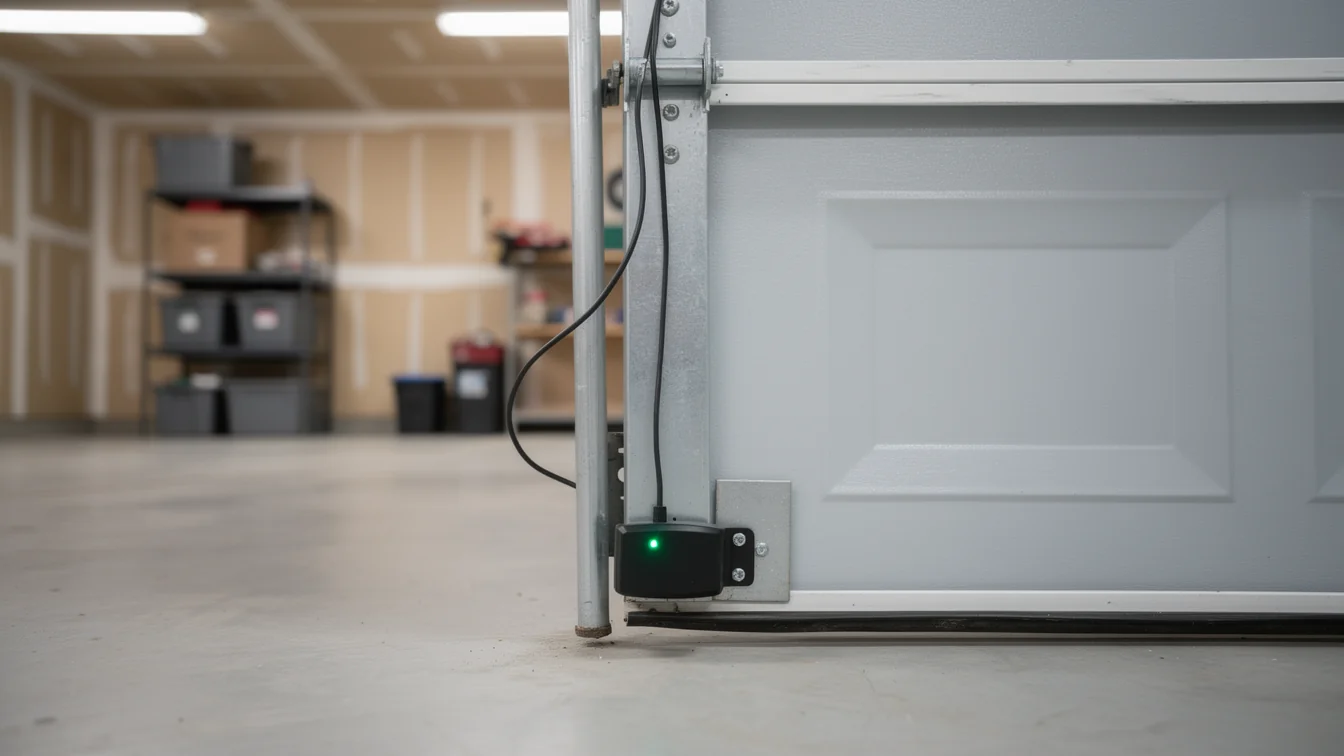
Garage door safety sensors work by shooting an infrared beam across the bottom of the opening. Break that beam and the door won't close - that's the point. The problem is the brackets holding those sensors are small, light, and usually attached to whatever the original builder had on hand: wood trim on a lot of the 1960s and '70s homes in this area, or a metal track bracket on later builds. Neither is rock-solid forty or fifty years on. A bump from a bike, a car mirror, or just normal vibration from decades of door cycles nudges the bracket. The sensor still lights up, still looks fine, but the beam is now aimed a degree or two off, which is enough for it to miss intermittently. Homeowners usually assume the sensor itself failed because the light sometimes works and sometimes doesn't - but a sensor that's actually dead stays dead. One that's drifting is almost always a mechanical alignment problem, not an electrical one.
What Most People Get Wrong
The most common mistake we see is someone cleaning the sensor lenses with a rag, deciding that fixed it because the door closed once, and moving on. Dust on the lens is real, but on houses of the age common around here, the bracket itself has usually shifted, and a clean lens pointed slightly off-axis still won't throw a reliable beam. The second mistake is assuming both sensors need replacing when only one bracket has moved - we can usually realign rather than swap parts. One honest limit: if the bracket or the wood it's screwed into has actually rotted or cracked, realignment won't hold, and at that point replacing the mount is the right call, not a workaround. We'd rather tell you that up front than have you pay twice.
Frequently asked questions
Why does my garage door sensor light blink only sometimes?
That's the signature of a sensor that's slightly misaligned rather than broken. A dead sensor stays dark. An intermittent blink usually means the bracket has shifted a degree or two over the years, which is common in houses built decades ago where the mount is wood trim or an older metal bracket.
Is it the humidity causing my sensors to act up?
Indirectly, yes. Pembroke Pines doesn't get freeze-thaw damage, but the steady warmth and humidity here cause slow expansion and contraction in garage mounts over the years, which loosens screws and nudges brackets out of alignment without any single dramatic event.
Can I fix a misaligned sensor myself?
Often yes - loosen the bracket screw, nudge the sensor until the indicator light goes solid, and retighten. If the bracket is rotted, cracked, or won't hold position once tightened, that's a sign the mount itself needs replacing rather than another adjustment.
Why did this start happening after years of no problems?
Sensor drift is usually gradual, not sudden. On homes from the 1960s and '70s common in this area, decades of door cycles and warm, humid air slowly move the bracket until one day it crosses the threshold from working to failing.
Related garage door services in Pembroke Pines
More garage door guides
Book garage door service in Pembroke Pines
Call now or request a quote - tell us what the door is doing and where you are.