Pembroke Pines, FL · Garage Door Service
Is Your Older Pembroke Pines Garage Door Worth Fixing
Pembroke Pines homes mostly date to the 1960s-70s with some up to 2005. Here's how to tell if your original door is worth repairing or past it.
- Repairs & new doors
- Springs & openers
- Serving 7 nearby communities
Doing Nothing For Now
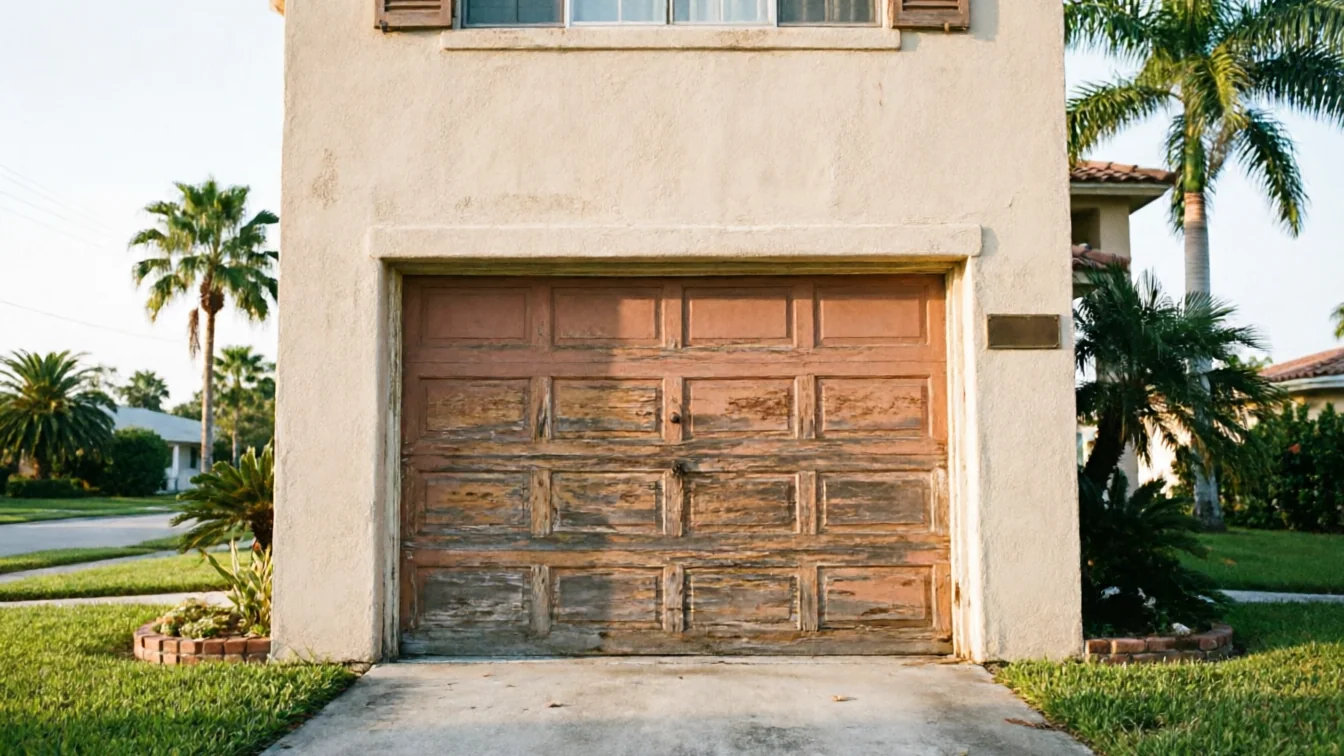
A lot of doors in this area are original to the house, and the housing stock here runs from 1953 up through 2005, with the bulk of it going up in the 1960s and 70s. If your door still opens and closes without grinding, without the opener straining, and the panels aren't bowed, leaving it alone for now is a legitimate choice. We'd rather tell you that than talk you into a job you don't need yet. The honest limitation here: we can't tell you how long "for now" lasts without seeing the door in person, because a spring that's fine today can snap next month and we don't guess at that over the phone. What we can tell you is that a door from a house built in the 1960s or 70s is old enough that its hardware predates a lot of what's stocked on trucks today, so when something does go, the fix usually isn't a five-minute part swap.
What the Weather Here Does to It
Pembroke Pines sits in a mild temperate band, so we're not dealing with the freeze-thaw cycle that cracks panels or seizes track in colder parts of the country. That actually works in your favor for an older door - the steel and the hardware age slower here than they would somewhere with hard winters. What does wear things down is humidity and daily heat cycling on rollers, hinges, and the galvanized coating on springs, which is a slower, quieter kind of wear. It doesn't announce itself with a dramatic failure the way cold-climate damage does. It shows up as a door that's gotten a little louder, a little heavier on the opener, over years. If your door is original to a house built decades back and it's never been serviced, that steady wear is worth checking before you decide fixing it is the right call.
What Is Going On
Across the 41 named areas that make up this service area, the stock is mostly 1960s and 70s construction, with a median build year around 1972. That means a sizable share of doors we look at are themselves decades old, or they're a replacement door mounted on original opener hardware and track from that era. When a door from that period is worth fixing, it's usually because the panels and frame are sound and the problem is a spring, a cable, or a roller - parts that get replaced regardless of the door's age. When it's not worth fixing, it's usually because the track or hinges have been reworked more than once already, or the panel steel itself is thin and dented in a way that no adjustment corrects. We look at the door, not just the year it was installed, before we tell you which side of that line you're on.
What Most People Get Wrong
The most common mistake we see is treating the opener and the door as one unit. People hear the motor straining and assume the whole system needs replacing, when often it's a spring that's lost tension, making the opener do work it was never built to do. Fix the spring and the opener goes back to running quiet. The other mistake, more common in the older stock around here, is assuming that because a door is original to a house built in the 70s, it's automatically due for replacement. Age alone doesn't condemn a door. A well-maintained door from that era, on sound track, can keep going for years yet with the right repair. We'll tell you plainly when a repair is throwing money at a door that's done, but we won't tell you that just because the door has some years on it.
Frequently asked questions
My garage door is original to a house built in the 1970s. Is it too old to repair?
Not necessarily. Age by itself doesn't make a door not worth fixing. What matters is the condition of the panels, track, and hardware. A lot of doors from that era are still structurally sound and just need a spring, cable, or roller replaced. We'll look at the actual door before recommending replacement over repair.
Does Pembroke Pines weather wear garage doors out faster?
The mild temperate climate here is actually easier on doors than colder regions with freeze-thaw cycles. What does wear parts down is steady heat and humidity on rollers, hinges, and spring coatings over years, which shows up gradually rather than as sudden damage.
How do I know if it's the spring or the whole door that's the problem?
If the opener strains, sounds loud, or the door feels heavy to lift by hand, that's often a spring that's lost tension rather than a door that's failing. Bowed panels, cracked frame sections, or track that's been bent and rebent more than once point toward the door itself being the issue.
Related garage door services in Pembroke Pines
More garage door guides
Book garage door service in Pembroke Pines
Call now or request a quote - tell us what the door is doing and where you are.